6 Proven Best Wicketkeeper Hip Mobility Exercise Routine Drills
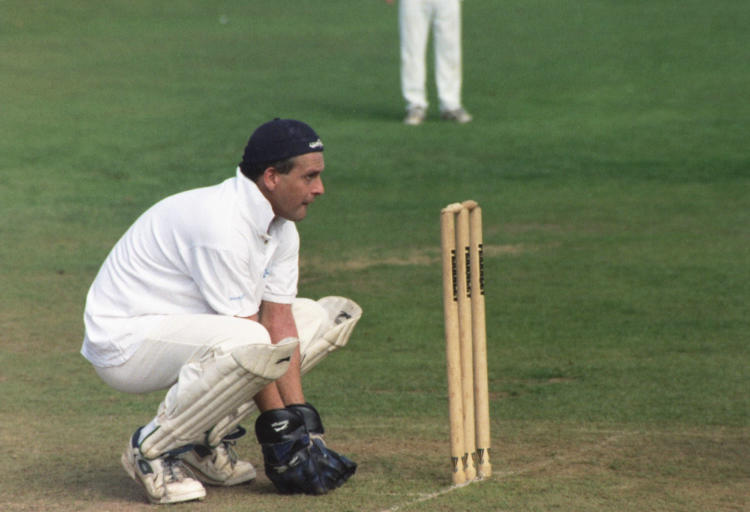
When it comes to wicketkeeping, hip mobility and strength are critical for peak performance. Unlike ordinary stretches that provide only temporary relief, these drills focus on hip activation and dynamic mobilisation, targeting the specific demands of the position. By engaging key muscles and improving joint range of motion, these routines not only prepare your hips for quick lateral movements and deep squats but also enhance long-term performance.
Incorporating these exercises into your training will help you build strength, stability, and flexibility, ensuring you can move swiftly, stay low, and react explosively behind the stumps. These aren’t just stretches—they’re performance enhancers.
Here are the top 6 most effective hip performance and mobility exercises for wicketkeepers, focusing on hip activation and mobility to improve performance:
Essential Wicketkeeping Drills for Improving Reflexes and Technique
1.SUPINE HIP FLEXOR (Banded) – Activation
Purpose:
- Activates the hip flexors to improve strength and control when rising from a low crouch or initiating a sprint.
- Enhances hip flexor endurance to maintain proper positioning throughout long innings.
- Strengthens the hip stabilisers to improve reaction speed in lateral and forward movements.
Execution:
- Lie on your back with a resistance band looped around the middle of your foot.
- Drive one knee toward your chest while maintaining tension on the band.
- Slowly extend the leg back out without losing core engagement.
- Perform 10–12 reps per side.
- Keep the opposite leg straight and pressed into the floor.
- Keep your lumbar spine neutral (tilt pelvis backwards).
2. PRONE FOAM ROLL INTERNAL ROTATION – Activation
Purpose:
- Activates the deep hip rotators and adductors.
- Increases internal rotation strength for better lateral loading and force generation in low stances.
- Improves hip integrity and control when shifting between crouch and upright positions.
Execution:
- Start in a prone (face down) position with a foam roller placed under one thigh.
- Bend the knee to 90 degrees.
- Internally rotate the hip by moving the foot outward while keeping contact with the roller.
- Slowly return to the starting position.
- Perform 8–10 reps on each side.
- Keep the hips and pelvis level throughout the movement.
3. DEFICIT GLUTE BRIDGE (or FLOOR BRIDGE) – Activation
Purpose:
- Activates the glute max and hamstrings to increase hip drive power.
- Improves posterior chain strength for enhanced force production when pushing out of a crouch or lateral movement.
- Enhances pelvic stability to maintain proper hip position during dynamic movement.
Execution:
- Lie on your back with your feet elevated on a low platform (or on the floor for a floor bridge).
- Bend your knees to 90 degrees.
- Drive through your heels and lift your hips toward the ceiling, squeezing the glutes at the top.
- Hold for 1–2 seconds, then slowly lower back down.
- Perform 10–12 reps.
- Keep the pelvis level and avoid hyperextending the lower back.
4.STANDING ABDUCTED INTERNAL ROTATION (Mobility + Stability)
Purpose:
- Improves hip internal rotation strength and control in an abducted position.
- Enhances glute medius and deep hip rotator activation under load.
- Develops single-leg stability and core engagement — critical for dynamic lateral movement and quick adjustments from the crouch.
- Reinforces proper pelvic alignment and trunk control under rotational load.
Execution:
- Stand next to a rack or other stable surface, using the inside arm for light support.
- Slightly bend the inside leg to create a stable base.
- Raise the outside leg in front at 90 degrees – then abduct it as much as possible (ideally in line with your shoulder)
- From this position, slowly internally rotate the hip by turning the heel upward without losing control of the pelvis or trunk.
- Keep the knee from dropping
- Slowly return to the starting position.
- Perform 8–10 reps on each side.
- Keep the core engaged and maintain balance — avoid trunk compensation.
5. DEEP SQUAT ALTERNATED INTERNAL ROTATION (Mobility)
Purpose:
- Improves hip internal rotation and deep squat capacity.
- Enhances ability to stay low in the crouch position without compensating through the knees or lower back.
- Strengthens the hip rotators and promotes better loading and force absorption when transitioning between squatting and lateral movement.
Execution:
- Start in a deep squat position with feet slightly wider than shoulder-width apart and toes pointed slightly outward.
- Shift your weight slightly to one side and internally rotate the opposite leg by dropping the knee inward.
- Keep the foot flat on the ground while maintaining balance.
- Hold the position for 2–3 seconds, then return to the starting position.
- Alternate sides for 6–8 reps each side.
- Maintain a neutral spine and avoid excessive knee valgus.
6. SEATED 90-90 HEEL TAPS (Mobility)
Purpose:
- Improves hip rotational control and active mobility through external and internal rotation.
- Develops hip joint integrity under tension, improving stability in the low crouch position.
- Enhances ability to adjust foot and hip positioning rapidly when reacting to deliveries.
Execution:
- Sit on the ground in a 90-90 position (front leg externally rotated, back leg internally rotated).
- From this position, lift the heel of the back leg off the ground without shifting your torso.
- Tap the heel back down with control.
- Repeat for 8–10 reps per side.
- Keep the movement slow and controlled, focusing on maintaining hip alignment.
Effective Exercises for Improving Internal Hip Rotation
Improving internal hip rotation is essential for enhancing mobility and flexibility, especially for athletes and individuals who engage in activities that require dynamic movement.
Exercises that focus on internal hip rotation help increase range of motion, improve posture, and prevent injury. Here are some effective exercises designed to improve internal hip rotation:
Seated Hip Internal Rotation Stretch
This stretch targets the hip rotators and helps improve flexibility. To perform it, sit on the floor with your legs extended in front of you. Cross one leg over the other, placing the ankle on the opposite knee. Gently press the raised knee down toward the floor to feel a stretch in your hip. Hold this position for 20-30 seconds, then switch sides.
Hip Rotator Stretch (Figure 4 Stretch)
The figure 4 stretch targets the hip rotators and enhances internal rotation. Begin by lying on your back with knees bent and feet flat on the floor. Cross one leg over the other so that your ankle rests on the opposite knee. Press the raised knee toward the floor, holding the stretch for 30 seconds, and then repeat on the other side.
Lunge with Internal Rotation
This dynamic exercise helps improve hip stability and internal rotation. Begin in a standing position, step one foot forward into a lunge, and rotate the hip of your front leg inward, bringing the knee toward the body’s midline. Hold for a few seconds and return to the starting position. Repeat 8-10 times on each leg.
Hip Internal Rotation with a Band
Using a resistance band, you can strengthen the hip rotators and improve internal rotation. Attach the band to a sturdy object and loop it around your ankle. Stand with the band pulling your leg outward and rotate your hip inward by bringing the foot closer to the other leg. Hold for a moment before returning to the starting position. Perform 10-12 repetitions on each side.
Standing Hip Rotations
To increase range of motion in the hip joint, stand with feet hip-width apart and knees slightly bent. Rotate one leg inward at the hip, bringing the toes toward the center, while keeping your knee in place. Return to the starting position and repeat for 10-12 repetitions on each leg.
90/90 Hip Stretch
The 90/90 hip stretch is great for improving both flexibility and internal rotation. Sit on the floor with one leg bent in front of you at a 90-degree angle, and the other leg bent behind you at a 90-degree angle. Lean forward slightly to stretch your hip, then rotate the back leg inward, bringing the toes closer to the floor. Hold for 20-30 seconds and then switch sides.
Squat to Internal Rotation
A squat to internal rotation exercise improves hip flexibility while engaging multiple muscle groups. Start in a squat position with feet shoulder-width apart. As you squat, rotate your hips internally, allowing your knees to turn slightly inward. Push through your heels to return to standing, maintaining internal rotation throughout the movement. Perform 8-10 repetitions.
Incorporating these exercises into your routine can help improve hip mobility, reduce stiffness, and enhance overall movement quality. Consistent practice of these exercises, with proper form and control, can significantly enhance your internal hip rotation and help prevent potential injuries.
Bonus Tip for Wicketkeepers
Incorporating these exercises 3-4 times per week will enhance hip mobility, activation, and stability. Pair these with sport-specific drills like lateral shuffles and low squats to maximise transfer to wicketkeeping performance.
ATHLETIX Brisbane was founded in 2021 with the vision of delivering high-performance training to everyone, not just elite athletes. We wanted to create an environment where training is backed by science and expert coaching, making athletic development accessible to all ages. What truly sets us apart is the level of expertise under one roof. All our S&C coaches hold degrees in Exercise and Sports Science or Exercise Physiology and are accredited Strength and Conditioning coaches through the ASCA (Australian Strength and Conditioning Association). They bring extensive experience working with youth and elite athletes of all sports.
FAQS
Why do wicketkeepers squat?
Wicketkeepers squat to maintain a low, balanced position for quick reactions and better visibility of the ball.
What are stabilization exercises particularly good for?
Stabilization exercises are great for improving core strength, balance, and overall body control.
Does leg press improve squat?
Leg press can strengthen the leg muscles but does not directly improve squat technique or mobility.
How to wicket keeper?
Stand low with eyes level, hands ready, and stay focused on the ball. Practice footwork, catching, and staying alert for every delivery.
How to be a good wicket keeper?
Improve reflexes, hand-eye coordination, footwork, and fitness. Stay consistent in practice, communicate with bowlers, and anticipate movement.
Which exercise is most useful for hip mobility?
The 90/90 stretch is one of the most effective for improving hip mobility.
How to unlock full hip mobility?
Combine dynamic stretches (hip circles, lunges) with deep static stretches and strengthen surrounding muscles regularly.
Can I do hip mobility daily?
Yes, daily hip mobility work is safe and beneficial if done with proper technique and intensity.
What is hip mobility training?
It’s a series of movements and exercises that improve the flexibility, strength, and control of the hip joint.
How to improve hip mobility quickly?
Do consistent daily stretches like deep lunges, hip openers, and active mobility drills for at least 10–15 minutes.
How to reduce hips in 7 days?
Spot reduction isn’t possible, but combining cardio, strength training, and a clean diet can help reduce overall body fat, including the hips.