
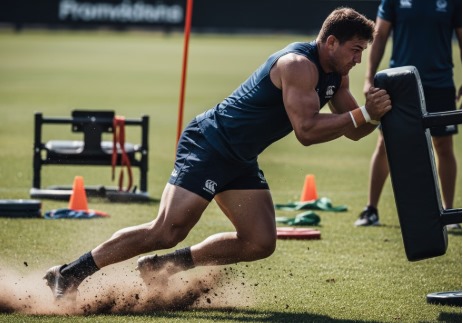
How to Improve Tackling Technique with Strength Training
Every successful rugby player knows that tackling isn’t just about aggression — it’s about timing, control, and power. At Athletix, we train athletes to build the kind of functional strength that turns every tackle into a calculated, unstoppable hit.
If you’ve ever wondered how to improve tackling technique with strength training, you’re in the right place. This guide breaks down the best rugby tackling drills, muscle-specific workouts, and strength-building methods to help you tackle harder, safer, and more effectively — whether you’re a youth player or a seasoned forward.
Strength training for tackling goes beyond lifting weights. It’s about building stability, explosiveness, and body awareness so you can deliver controlled impact and recover instantly.
Why Strength Training Matters for Tackling
Tackling is one of rugby’s most physically demanding skills. Without strength, even perfect form won’t save you from getting driven backward.
Strength training improves:
- Explosive leg drive for initiating contact.
- Core stability to absorb impact and maintain balance.
- Upper body control for wrapping and finishing tackles.
- Neck and shoulder strength to protect against collisions.
💬 Athletix Tip: “A strong tackle isn’t about who hits harder — it’s about who stays stable longer.”
Key Muscle Groups for Better Tackling Power
To improve your rugby tackling technique, focus on training the muscles that deliver force, control body position, and resist opposing players.
Lower Body – The Engine Behind Every Tackle
Your legs drive the tackle. Strong quads, glutes, and hamstrings help you explode forward and control balance.
Best Exercises:
- Squats (Back, Front, Goblet)
- Lunges (Walking & Reverse)
- Sled Pushes or Prowler Drives
- Box Jumps and Step-Ups
Pro Tip: Add sled pushes and weighted step-ups twice a week to simulate forward drive during tackles.
Core Strength – Stability and Impact Transfer
Your core is your tackling control center. It connects the upper and lower body, allowing you to transfer power efficiently and resist being knocked off balance.
Top Core Exercises for Rugby Tackles:
- Planks and Side Planks
- Pallof Press
- Cable Rotations or Medicine Ball Twists
- Dead Bugs and Hanging Leg Raises
Athletix Insight: A strong core helps you maintain posture through contact — key for safe, effective tackling.
Upper Body – Wrapping, Driving, and Controlling
The arms, shoulders, and chest generate the push-through power that completes the tackle.
Essential Strength Exercises:
- Bench Press or Dumbbell Chest Press
- Shoulder Press (Standing or Seated)
- Bent-Over Rows
- Medicine Ball Chest Passes
This improves your tackling wrap strength and shoulder control, reducing risk of missed or unsafe hits.
Neck and Traps – Safety and Collision Control
Neck and upper back strength protect you from whiplash and give you control when locking into a tackle.
Try This:
- Isometric Neck Holds (front, side, and back)
- Dumbbell Shrugs
- Resistance Band Neck Extensions
Athletix Reminder: Your neck is your helmet. Strengthen it to stay safe.
The Mechanics of a Safe and Powerful Tackle
To tackle effectively, strength must be applied through precise technique:
- Footwork & Balance: Stay low, knees bent, and weight slightly forward.
- Head Positioning: Keep your head to the side — never in front of the impact.
- Shoulder Contact: Drive through the shoulder, not with your arms.
- Arm Wrap: Secure the legs or midsection and pull tight.
- Leg Drive: Keep pushing forward after contact to finish the tackle.
Drill Example:
Pair strength sessions with 5–6 controlled contact tackles using pads or sleds. This builds muscle memory for safe tackle execution under fatigue.
Strength Exercises to Improve Tackling Technique
Compound Lifts for Total Power
These full-body moves train multiple muscles to generate tackle force:
- Back Squats
- Deadlifts
- Power Cleans
- Weighted Carries
Athletix Power Tip: Focus on explosive intent — move the bar with speed and control to mimic tackle acceleration.
Plyometric & Explosive Drills
These develop rapid power transfer — the key to quick, dominant tackles.
- Box Jumps
- Broad Jumps
- Medicine Ball Slams
- Sled Drives
Isometric and Stability Training
Holding static positions strengthens bracing and control under pressure.
- Wall Sits (30–60 seconds)
- Plank with Shoulder Tap
- Band-Resisted Tackle Holds
Partner & Resistance Drills
Simulate real tackle resistance safely with partner drills.
- Band-Resisted Tackles
- Shoulder Pad Drives
- Controlled Contact Pushes
Athletix Coach Tip: Combine one strength day with one contact simulation day each week for realistic rugby conditioning.
Weekly Tackling Strength Training Split
| Day | Focus | Example Workouts |
| Day 1 | Lower Body Power | Squats, Lunges, Sled Pushes |
| Day 2 | Upper Body Strength | Bench Press, Rows, Shoulder Press |
| Day 3 | Core & Stability | Planks, Pallof Press, Cable Rotations |
| Day 4 | Explosiveness & Drills | Box Jumps, Med Ball Slams, Tackle Pads |
| Day 5 (Optional) | Recovery | Mobility, Foam Rolling, Light Jog |
Athletix Programming Tip: Alternate between heavy days and explosive days to maximize power without overtraining.
Injury Prevention & Recovery
- Warm up dynamically: leg swings, hip openers, and shoulder rotations.
- Cool down with foam rolling and static stretches.
- Prioritize neck and shoulder mobility after contact sessions.
- Sleep 7–9 hours for muscle recovery.
- Use ice baths or light cycling to reduce soreness after tackle-heavy training.
Common Tackling Mistakes & How to Fix Them
| Mistake | Correction |
| Leading with head | Always drive with shoulder and keep head to the side |
| Standing upright | Lower your center of gravity before contact |
| Poor leg drive | Strengthen glutes and quads; keep pushing after impact |
| Weak wrap | Train grip and arm strength with carries and pulls |
| Overtraining | Limit contact sessions to 2–3 per week with recovery days |
🏁 Conclusion: Build Power, Control, and Confidence in Every Tackle
Improving your rugby tackling technique isn’t about being the biggest — it’s about being the most balanced, prepared, and explosive.
Through targeted strength training for tackling, you can hit harder, stay safer, and recover faster.
At Athletix, our mission is to help every player — from youth beginners to advanced athletes — train smart, stay powerful, and tackle with confidence.
Remember: every tackle starts in the gym and finishes on the field.
❓ FAQs – Tackling Technique & Strength Training
- How do I improve tackling strength in rugby?
You can improve tackling strength by combining compound lifts (like squats, deadlifts, and bench presses) with explosive power drills such as sled pushes and medicine-ball slams. Focus on your legs, core, and shoulders to generate more driving force through impact. - How can I improve my rugby tackling technique?
Work on body positioning, shoulder contact, and head placement. Stay low, lead with your shoulder, and wrap tightly with your arms. Strength training builds the power you need, but technique comes from consistent, controlled practice on the field. - What are some tips for good tackling technique?
- Keep your eyes up and back straight.
- Stay low and balanced before contact.
- Drive through the target using your legs.
- Lead with your shoulder — never your head.
- Wrap and finish the tackle with strong arm control.
💡 Athletix Tip: Perfect form and strength training together make every tackle safe and dominant.
- How to improve tackling rate in matches?
Improve your tackling rate by combining conditioning and reaction drills with strength work. Focus on agility, speed, and endurance to reach tackles faster, and use video review or coach feedback to analyze and correct missed tackles. - What muscles do you use to tackle in rugby?
Tackling uses nearly every major muscle group, especially the glutes, quads, hamstrings, core, shoulders, chest, and neck. The lower body provides drive, the core stabilizes the impact, and the upper body completes the wrap and push-through. - How to encourage tackling in young or hesitant players?
Start with confidence-building, low-contact drills using tackle bags or pads. Teach correct technique and safety first, then gradually increase intensity. Strength training helps players feel more capable and reduces fear of contact, encouraging commitment to tackles. - Can I train tackling technique without full contact?
Yes. Use resistance bands, pad pushes, and controlled partner drills to practice positioning and power safely. These simulate real tackles without the risk of collision fatigue. - How often should rugby players practice tackling drills per week?
Two to three sessions weekly are ideal. Balance one strength session for power, one technical session for form, and one light contact or simulation day to build confidence and muscle memory.