Reformer Pilates or Mat Pilates: Which One Is Better?

Pilates has become one of the most popular fitness practices worldwide, attracting people who want to build strength, improve flexibility, enhance posture, and reduce stress. While there are many branches of Pilates, the two most common forms are Reformer Pilates and Mat Pilates. Both offer tremendous benefits, but they differ in terms of equipment, cost, accessibility, and intensity. This often leads to the big question: Reformer Pilates or Mat Pilates—which one is better?
The short answer is that neither is strictly better than the other. Instead, the choice depends on your fitness goals, personal preferences, physical condition, and lifestyle. To help you make the right decision, this article explores the differences between Reformer and Mat Pilates, their unique benefits, challenges, and who might benefit more from each. By the end, you will have a clear understanding of which form of Pilates best aligns with your needs.
What Is Mat Pilates?
Mat Pilates is a form of exercise that focuses on building core strength, improving flexibility, and enhancing body awareness using only a mat and sometimes small props like resistance bands, balls, or rings. Unlike reformer Pilates, which relies on specialized equipment, mat Pilates is performed entirely on the floor, making it accessible to beginners and advanced practitioners alike.
The exercises are based on the original principles developed by Joseph Pilates, emphasizing controlled movements, proper breathing, concentration, and alignment. This workout engages not only the abdominal muscles but also the back, hips, and glutes, creating balanced strength throughout the body. Mat Pilates is particularly beneficial for improving posture, reducing the risk of injury, and increasing stability.
Because it uses body weight as resistance, it helps develop lean muscles without putting excessive strain on the joints. Whether practiced in a group class, at home, or with an instructor, mat Pilates offers a versatile and effective way to enhance both physical fitness and mental well-being.
What Is Reformer Pilates?
Reformer Pilates is a form of Pilates exercise that uses a specially designed machine called the Reformer to enhance strength, flexibility, and control. The Reformer consists of a flat, cushioned carriage that slides back and forth on wheels, connected to adjustable springs, ropes, and pulleys. These springs provide varying levels of resistance, allowing exercises to be modified from gentle support to challenging intensity.
Unlike Mat Pilates, which relies mainly on bodyweight, Reformer Pilates incorporates resistance training, making it more versatile for building strength and stability. It can be used to target every muscle group, improve posture, and increase flexibility through controlled, precise movements.
The support of the Reformer makes it particularly beneficial for people in rehabilitation or those with limited mobility, as it reduces joint strain while still delivering a highly effective workout. Whether for beginners or advanced practitioners, Reformer Pilates offers a wide range of exercises that can be adapted to suit individual fitness levels and goals.
How to Choose Between Mat Pilates vs. Reformer Pilates?
Deciding between Mat Pilates and Reformer Pilates comes down to your goals, budget, and personal preferences. Both methods share the same Pilates principles of controlled movement, breath, posture, and core engagement, but they differ in how they are practiced and what they offer.
If you’re looking for affordability and convenience, Mat Pilates may be the better choice. All you need is a mat, making it easy to practice at home, outdoors, or while traveling. It focuses heavily on bodyweight strength, especially core muscles, and is a great way to build a solid Pilates foundation. However, Mat Pilates can feel challenging for beginners since there is no external support from equipment.
On the other hand, Reformer Pilates uses a machine with springs and pulleys, offering adjustable resistance and more variety in exercises. It is excellent for people seeking structured studio classes, rehabilitation after injuries, or progressive strength training. The Reformer provides support that helps beginners maintain correct alignment, while also offering challenging resistance for advanced practitioners. The downside is cost, as Reformer sessions and equipment are generally more expensive.
When choosing between the two, consider the following:
- Your Goals: For general fitness and core strength, Mat Pilates is ideal. For rehabilitation, advanced strength, and flexibility, Reformer Pilates is better.
- Your Budget: Mat Pilates is budget-friendly, while Reformer requires investment.
- Your Lifestyle: If you prefer flexibility and independence, Mat Pilates fits well. If you enjoy guided studio sessions with specialized equipment, the Reformer is more suitable.
In the end, neither is superior—both complement each other. Many people find the best results by combining Mat Pilates for core foundations with Reformer Pilates for variety and progression.
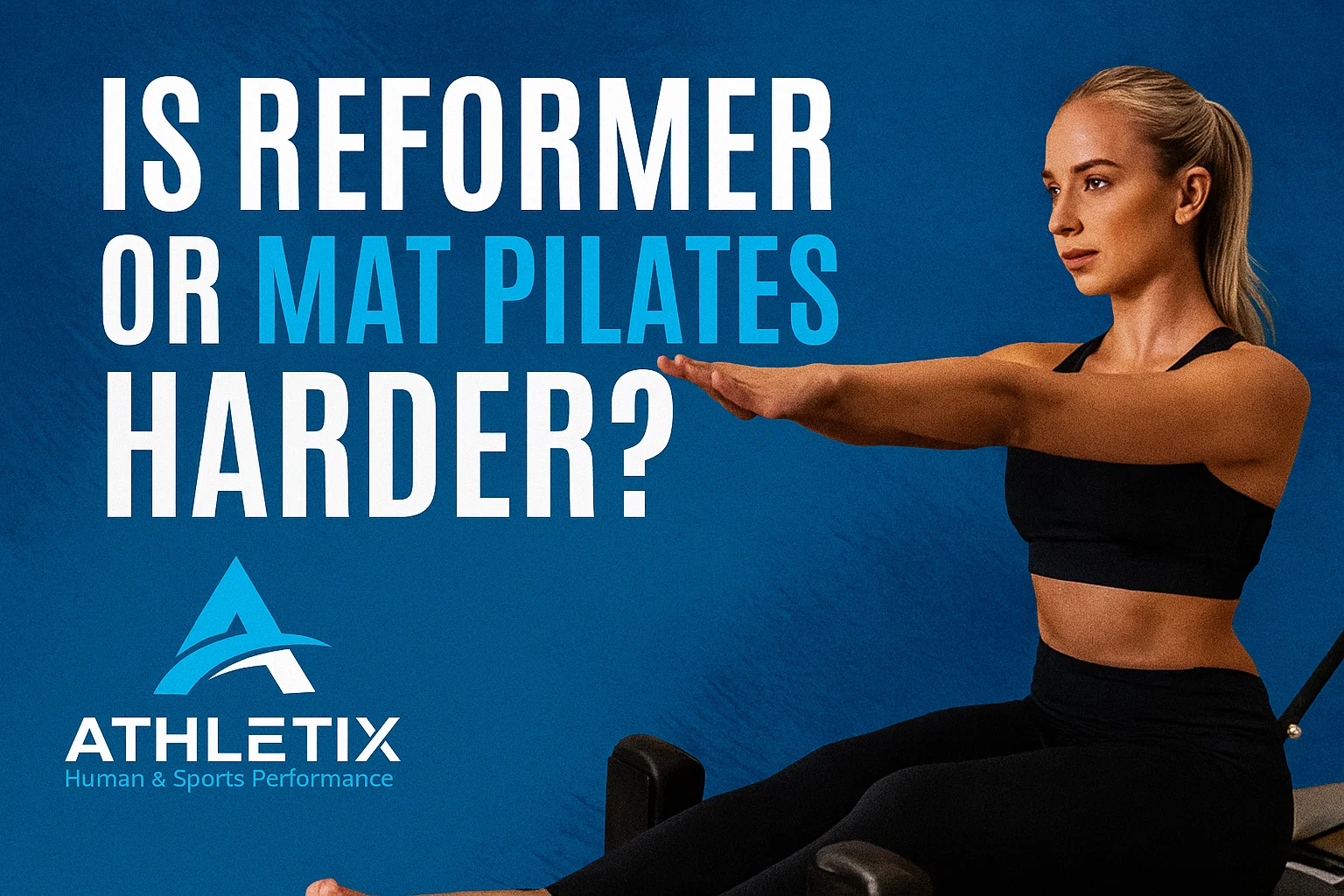
Is Reformer or mat Pilates Harder?

When comparing the difficulty level, Reformer Pilates is generally considered harder than Mat Pilates. This is primarily because Reformer Pilates uses specialized equipment with springs and pulleys, which provide adjustable resistance, requiring greater strength, stability, and control.
The moving carriage challenges your balance and engages deep core muscles more intensely than Mat Pilates, which relies mostly on bodyweight exercises performed on a stable surface. While Mat Pilates is highly effective for building flexibility, core strength, and overall muscle tone, it is typically more accessible for beginners and those looking for a low-impact workout.
Reformer Pilates, on the other hand, can be customized for all levels but often presents a steeper learning curve and more demanding exercises, making it a tougher option for those seeking an advanced and challenging Pilates experience.
Benefits of Mat Pilates Vs Reformer Pilates
When comparing Mat Pilates and Reformer Pilates, it’s important to understand that both forms of Pilates provide valuable benefits for strength, flexibility, and overall well-being. However, the way they deliver these benefits differs due to their approach—Mat Pilates relies on bodyweight and minimal equipment, while Reformer Pilates uses a resistance-based machine. Knowing the distinct advantages of each can help you determine which practice aligns with your fitness needs.
Benefits of Mat Pilates
Mat Pilates emphasizes core strength, stability, and control without the need for specialized equipment. Some of its key benefits include:
- Accessibility and Affordability – All you need is a mat, making it easy to practice at home, in studios, or while traveling. It’s also more budget-friendly compared to Reformer classes.
- Core Strength Development – Almost every movement requires activating the abdominal muscles, improving balance, and stability.
- Improved Flexibility and Posture – By focusing on controlled stretches and alignment, Mat Pilates helps lengthen muscles and correct posture.
- Mind-Body Connection – Since exercises are performed without machine support, they require concentration and mindfulness, enhancing body awareness.
- Foundation for Other Workouts – Mat Pilates builds a strong base that complements other forms of exercise like yoga, weight training, or running.
Benefits of Reformer Pilates
Reformer Pilates, with its sliding carriage and adjustable springs, offers resistance and support that take Pilates training to another level. Its main benefits include:
- Strength and Resistance Training – The springs provide variable resistance, helping build lean muscle strength more effectively than bodyweight alone.
- Rehabilitation-Friendly – The machine supports controlled movements, making it excellent for injury recovery and low-impact strengthening.
- Variety of Exercises – With hundreds of possible movements, it targets muscles from multiple angles, reducing workout monotony.
- Precision and Alignment – The guided support of the Reformer helps maintain proper posture and technique, reducing injury risk.
- Progressive Training – Adjustable resistance means workouts can be tailored for beginners or advanced athletes, allowing steady progression.
Key Differences Between Mat Pilates and Reformer Pilates
Here are four key differences between Mat Pilates and Reformer Pilates:
- Equipment Usage
- Mat Pilates: Requires only a mat, making it accessible and easy to practice anywhere. Small props like resistance bands or Pilates rings may be optional.
- Reformer Pilates: Uses a specialized reformer machine with springs, pulleys, and a sliding carriage to provide resistance and support.
- Resistance and Intensity
- Mat Pilates: Relies primarily on body weight and gravity for resistance, which can make exercises less intense initially.
- Reformer Pilates: Offers adjustable resistance through springs, allowing for a wider range of intensity levels and targeted muscle strengthening.
- Exercise Variety and Complexity
- Mat Pilates: Focuses on fundamental Pilates movements and core stability; exercise variations may be limited due to a lack of equipment.
Reformer Pilates: Enables more complex movements and exercises targeting multiple muscle groups simultaneously, including challenging stability and coordination exercises.
- Mat Pilates: Focuses on fundamental Pilates movements and core stability; exercise variations may be limited due to a lack of equipment.
- Learning Curve and Instruction
- Mat Pilates: Easier for beginners to start independently or with online guidance, as movements are simpler.
- Reformer Pilates: Typically requires a trained instructor, especially for beginners, due to the complexity of the equipment and the need for precise adjustments.
Mat Pilates vs reformer weight Loss
When it comes to weight loss, both Mat Pilates and Reformer Pilates offer unique benefits, but they work in slightly different ways. Mat Pilates primarily relies on bodyweight exercises, engaging core muscles, improving posture, and promoting overall muscle toning.
While it may not burn as many calories per hour as high-intensity cardio workouts, consistent practice helps increase lean muscle mass, which can boost metabolism and contribute to gradual weight loss. On the other hand, Reformer Pilates incorporates specialized equipment that allows for greater resistance and a wider range of motion.
This enables more intense strength-building exercises that can burn more calories and target specific muscle groups more effectively. For individuals focused primarily on weight loss, Reformer Pilates may offer a slightly faster path due to its added resistance and versatility, whereas Mat Pilates is excellent for beginners or those seeking low-impact, sustainable fat-burning routines. Ultimately, combining either form of Pilates with a balanced diet and regular cardio can maximize weight loss results.
Conclusion
In conclusion, both Mat Pilates and Reformer Pilates provide effective ways to improve strength, flexibility, posture, and overall well-being, but they cater to slightly different needs and preferences. Mat Pilates is ideal for those seeking an accessible, low-cost, and low-impact workout that strengthens the core and builds a strong fitness foundation. Reformer Pilates, with its specialized equipment and adjustable resistance, offers more variety, higher intensity, and targeted strength training, making it suitable for individuals looking for progressive workouts or rehabilitation support. Neither form is inherently better—your choice should depend on your fitness goals, experience level, budget, and lifestyle. For the best results, many practitioners find that combining both methods creates a balanced, effective, and enjoyable Pilates routine that supports weight loss, muscle toning, and overall health.
FAQS
- Can beginners start with Reformer Pilates, or should they do Mat Pilates first?
Beginners can start with either form, but many find Mat Pilates easier for building foundational strength and learning proper form. Reformer Pilates can be started under the guidance of a trained instructor to ensure safety and correct technique. - How often should I practice Pilates for noticeable results?
For best results, practicing Pilates 2–4 times per week is recommended. Consistency is key, as regular sessions improve core strength, flexibility, posture, and overall muscle tone over time. - Can Pilates help with back pain or posture issues?
Yes, both Mat and Reformer Pilates focus on core stability, alignment, and controlled movements, which can reduce back pain, improve posture, and strengthen supporting muscles. Reformer Pilates may offer additional support for rehabilitation due to its adjustable resistance. - Do I need special clothing or accessories for Pilates?
Comfortable, form-fitting workout clothes are ideal to allow movement and proper form visibility. For Mat Pilates, a mat is essential, and optional props like resistance bands or Pilates rings can enhance exercises. Reformer Pilates requires minimal clothing adjustments, but avoiding loose garments that can catch in the machine is recommended. - Is Pilates effective for overall fitness or just for core strength?
Pilates is highly effective for overall fitness. While core strength is a primary focus, both Mat and Reformer Pilates improve flexibility, balance, posture, muscle tone, and mind-body awareness, making it a comprehensive low-impact workout suitable for many fitness goals.