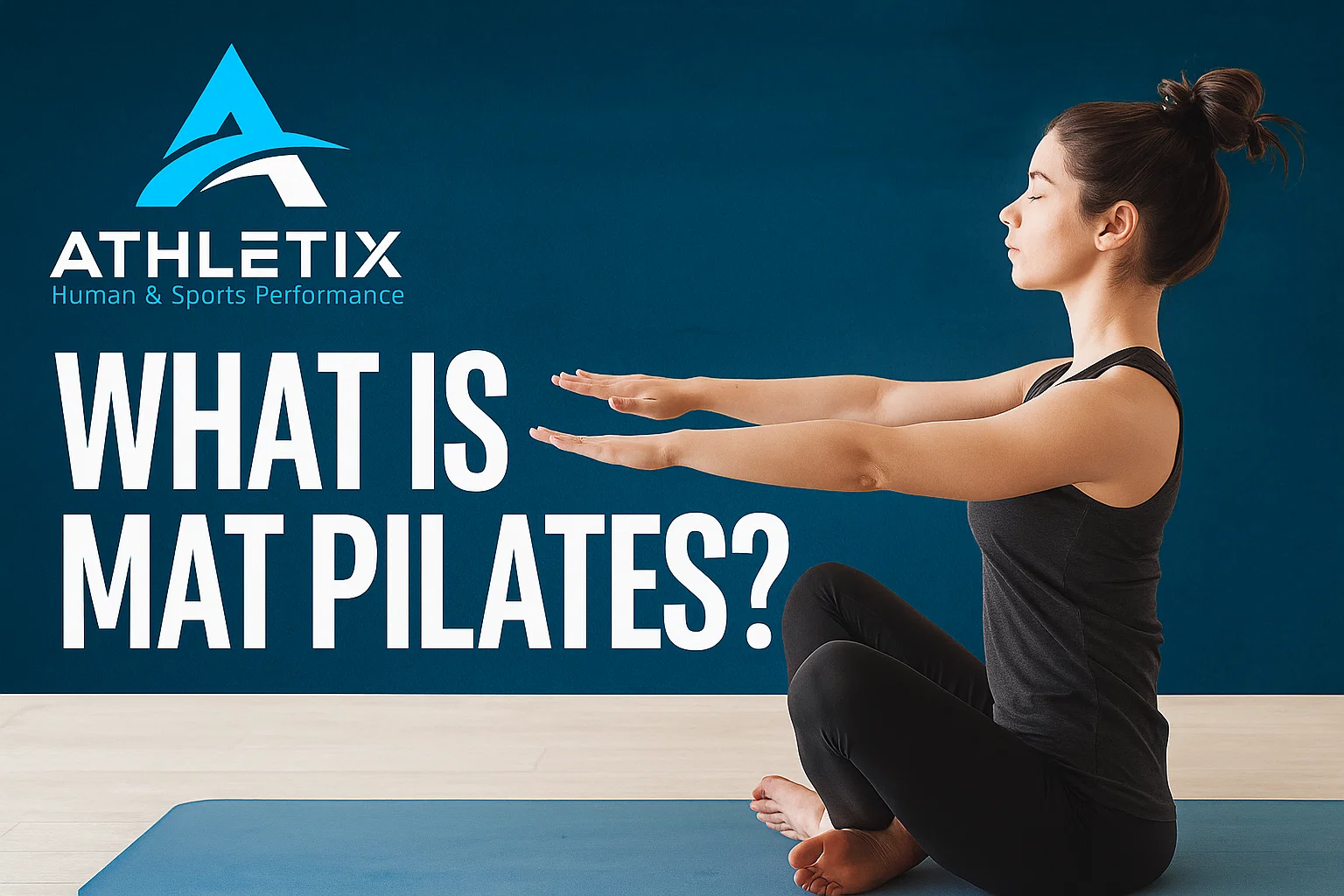
What is Mat Pilates?

Pilates has evolved from a niche fitness routine into a mainstream practice widely adopted by people worldwide. Among the many forms of Pilates, Mat Pilates stands out as one of the most accessible and effective. Unlike reformer Pilates, which requires specialized equipment, mat Pilates utilizes only a simple exercise mat and occasionally small props. Despite its simplicity, it delivers powerful results, improving strength, flexibility, posture, and body awareness.
In this article, we will explore the history, principles, techniques, benefits, and common misconceptions about mat Pilates. By the end, you’ll have a comprehensive understanding of what mat Pilates is, how it works, and why it can be a transformative addition to your fitness routine.
How Mat Pilates Differs From Other Types of Workouts?
Mat Pilates stands out from other workout styles because it emphasizes controlled, precise movements and a deep connection between the body and mind rather than relying on heavy weights, high repetitions, or fast-paced routines.
Unlike strength training in the gym, which often focuses on isolating muscles through resistance machines or free weights, mat Pilates works by engaging multiple muscle groups simultaneously, with special attention to the core or “powerhouse.” This makes it a functional form of exercise that improves balance, posture, and movement efficiency.
Unlike high-impact workouts such as running or HIIT (High-Intensity Interval Training), mat Pilates is low-impact, placing minimal stress on the joints, which makes it safer and more sustainable for people of all ages.
Another key difference is that mat Pilates does not require expensive equipment or a gym setting—just a mat and sometimes small props—making it one of the most accessible fitness practices. Compared to yoga, which often emphasizes flexibility, mindfulness, and spiritual elements, Pilates is more fitness-oriented, focusing on core strength, alignment, and stability.
While cardio workouts primarily boost endurance and burn calories, mat Pilates builds strength and flexibility from the inside out, creating long-term improvements in how the body functions and feels. Ultimately, mat Pilates is unique because it blends strength training, flexibility, and mindful movement into one efficient system, offering benefits that go beyond traditional exercise approaches.
The Origins of Pilates and Its Evolution into Mat Work
Joseph Pilates developed Pilates in the early 20th century as a system of physical fitness. Originally known as “Contrology,” it emphasized controlled, precise movements and mindful breathing. Joseph believed that mental and physical health were deeply connected, and he designed his method to strengthen the body while calming the mind.
During World War I, he worked with injured soldiers, helping them regain mobility and strength. Later, when he moved to New York, dancers, athletes, and celebrities adopted his practice to improve performance and prevent injuries.
Mat Pilates specifically evolved from Joseph Pilates’ original exercises, which required no machinery. While reformer machines added resistance, mat work was designed to rely solely on bodyweight and gravity, making it portable, versatile, and accessible to anyone, anywhere.
The Benefits of Mat Pilates
Mat Pilates offers a wide range of benefits that go beyond simple exercise, making it one of the most effective and versatile fitness practices available. One of its biggest advantages is core strengthening—every movement in Pilates is centered around the “powerhouse,” which includes the abdominals, lower back, hips, and glutes.
A stronger core not only supports better posture but also reduces the risk of back pain and improves stability in everyday movements. Alongside strength, mat Pilates enhances flexibility by gently lengthening the muscles and increasing joint mobility, helping to counteract stiffness caused by sedentary lifestyles.
Unlike high-impact workouts, Pilates is low-impact, meaning it is safe for people of all ages, from beginners to older adults, and can even be adapted for rehabilitation after injuries.
Another key benefit is improved body awareness. The practice emphasizes mindful movement, precision, and control, which trains individuals to move with greater efficiency and balance. This awareness often carries over into daily life, reducing poor movement patterns that lead to strain.
Mat Pilates also promotes stress relief, as the focus on controlled breathing and flowing movements has a calming effect on the nervous system, similar to meditation. For athletes, Pilates is a powerful cross-training tool that improves performance by increasing endurance, balance, and flexibility while lowering the risk of injuries.
Overall, mat Pilates is not just about physical fitness; it enhances both the body and mind, making it a sustainable practice for long-term health and well-being.
What You Need for a Mat Pilates Workout?
One of the great things about Mat Pilates is that it requires very little equipment, making it accessible for beginners and easy to practice at home or in a studio. The primary item you need is a good-quality exercise mat that provides enough cushioning and support for your spine, hips, and joints.
A thicker mat is often preferred compared to a standard yoga mat, as Pilates involves more floor-based movements. While the mat is the only essential piece, optional props can enhance your workout and help with alignment, resistance, and balance.
These may include Pilates rings (magic circles) for strength training, resistance bands for added intensity, and small stability balls to engage core muscles. Some practitioners also use light hand weights or foam rollers to deepen stretches and improve posture.
Comfortable clothing that allows free movement is also important, and it’s best to go barefoot or wear Pilates socks with grips for stability. By keeping your setup minimal yet supportive, you can create an effective and enjoyable Mat Pilates practice anywhere.
Want to Take a Mat Pilates Class?

If you are considering joining a Mat Pilates class, you’re making a smart decision toward improving your core strength, flexibility, and posture. Unlike gym workouts that often rely on heavy equipment, Mat Pilates focuses on controlled, bodyweight-based movements performed on a mat. These classes are suitable for all fitness levels, from beginners who want to build a strong foundation to advanced practitioners looking for a challenging workout. Most classes start with basic breathing and alignment techniques, gradually moving into exercises that strengthen the abdominals, back, legs, and arms.
When choosing a Mat Pilates class, you’ll find options both in-person at studios and online through virtual platforms. In-person classes give you the advantage of direct instructor feedback and a motivating group environment, while online classes offer flexibility to practice from the comfort of home. Many instructors also tailor movements to individual needs, making Mat Pilates highly adaptable for people with different body types or fitness goals.
Before attending, all you need is a supportive Pilates or yoga mat, comfortable clothing, and an open mindset to focus on mindful movement. Props like resistance bands or Pilates rings may be provided in studios, but they’re optional for beginners. Classes usually last 45 to 60 minutes, combining strength, balance, and relaxation exercises. If you’re new, don’t worry—most instructors guide participants step by step, ensuring you build confidence with each session.
What are Mat Pilates Exercises?
Mat Pilates exercises are a series of controlled, low-impact movements performed on a mat that focus on strengthening the core, improving posture, enhancing flexibility, and promoting overall body awareness. Unlike traditional workouts that rely on heavy weights or machines, Mat Pilates uses bodyweight as resistance, sometimes with small props like resistance bands, Pilates rings, or balls to add variety and intensity.
These exercises typically target deep abdominal muscles, the back, hips, glutes, and legs, while also emphasizing correct breathing and alignment. Popular Mat Pilates exercises include the Hundred, Roll-Up, Leg Circles, Single-Leg Stretch, and Plank variations, each designed to improve strength, stability, and coordination.
Because they require minimal equipment, these exercises are highly accessible, making it easy to practice at home, in a studio, or even while traveling. Ultimately, Mat Pilates exercises are not just about building physical strength—they also cultivate mindfulness and body control, creating a balanced approach to fitness and overall well-being.
Mat Pilates Before and After
Practicing Mat Pilates can bring noticeable changes in both body and mind, making the “before and after” journey inspiring for many individuals. Before starting Pilates, people often experience poor posture, weak core muscles, limited flexibility, and even stress or tension from daily routines.
Movements may feel stiff, and maintaining balance or proper alignment during exercises can be challenging. However, after consistent practice, many notice significant improvements such as a stronger and more engaged core, increased flexibility, better posture, and enhanced body awareness. Beyond physical transformation, Pilates also promotes mental clarity, reduces stress, and supports overall well-being.
In the “after” phase, practitioners often feel more energized, aligned, and confident in their movements. Clothes may fit better as the body becomes leaner and more toned, thanks to the emphasis on strength without bulk. Even small changes, like improved breathing control and reduced back pain, can have a big impact on everyday life.
Unlike quick-fix workouts, Mat Pilates offers gradual but sustainable results, making it easier to maintain long-term fitness. With dedication and regular practice, the “before and after” difference in Mat Pilates showcases not just physical strength, but also improved mindfulness and balance in daily living.
Mat Pilates vs Reformer
When it comes to Pilates, two popular methods often compared are Mat Pilates and Reformer Pilates. While both share the same foundational principles—control, breathing, alignment, and core engagement—they differ in practice, equipment, and overall experience.
Mat Pilates is performed on the floor using a Pilates or yoga mat. It relies primarily on bodyweight exercises, sometimes supported by small props like resistance bands, rings, or balls. This form of Pilates is highly accessible, portable, and beginner-friendly, as it doesn’t require large equipment. It focuses on improving flexibility, posture, balance, and overall strength, making it easy to practice at home or in a group class setting.
Reformer Pilates, on the other hand, uses a specialized machine called a Reformer—a bed-like frame with a sliding carriage, springs, and straps. This equipment provides adjustable resistance, allowing for a greater range of motion and deeper muscle activation. Reformer Pilates often delivers quicker visible results, especially in toning, strength, and rehabilitation, because the springs challenge and support the body simultaneously. It is commonly used in studios under the guidance of trained instructors, as the equipment requires proper technique and safety awareness.
Conclusion
Mat Pilates is more than just an exercise routine—it is a holistic practice that strengthens the body, sharpens the mind, and enhances overall well-being. Unlike many workouts that rely heavily on equipment, Mat Pilates proves that with just a mat and mindful movement, you can achieve remarkable results in strength, posture, and flexibility. Whether you choose to practice at home, take a class, or even combine it with Reformer Pilates, this method remains one of the most accessible and effective ways to improve fitness and balance in daily life. By committing to regular practice, you’ll experience lasting benefits not only in physical transformation but also in mental clarity and stress relief. Ultimately, Mat Pilates offers a sustainable, empowering approach to movement that can support you at every stage of life.
FAQS
- Is Mat Pilates suitable for beginners with no prior fitness experience?
Yes, Mat Pilates is one of the most beginner-friendly forms of exercise because it relies on bodyweight and controlled movements rather than heavy equipment. Instructors often provide modifications, so even if you’re completely new to fitness, you can start at a comfortable level and gradually build strength, flexibility, and confidence. - How often should I practice Mat Pilates to see results?
Most people begin to notice improvements in posture, strength, and flexibility after practicing 2–3 times per week consistently for about a month. The key is regular practice. Even short 20–30 minute sessions can deliver noticeable benefits when done consistently. - Can Mat Pilates help with weight loss?
While Mat Pilates is not primarily a calorie-burning workout like cardio, it contributes to weight management by building lean muscle, improving metabolism, and enhancing body tone. Combined with a healthy diet and other forms of exercise such as walking, running, or cycling, Mat Pilates can support long-term weight loss and body composition goals. - Do I need special training to practice Mat Pilates at home?
No formal training is required to begin, but learning from a certified instructor—either in a class or through guided online sessions—can ensure correct form and prevent injury. Once you understand the basic movements and breathing techniques, practicing at home with a mat becomes very safe and effective.