
Cricket – A Global Spectacle and the Demands of Throwing
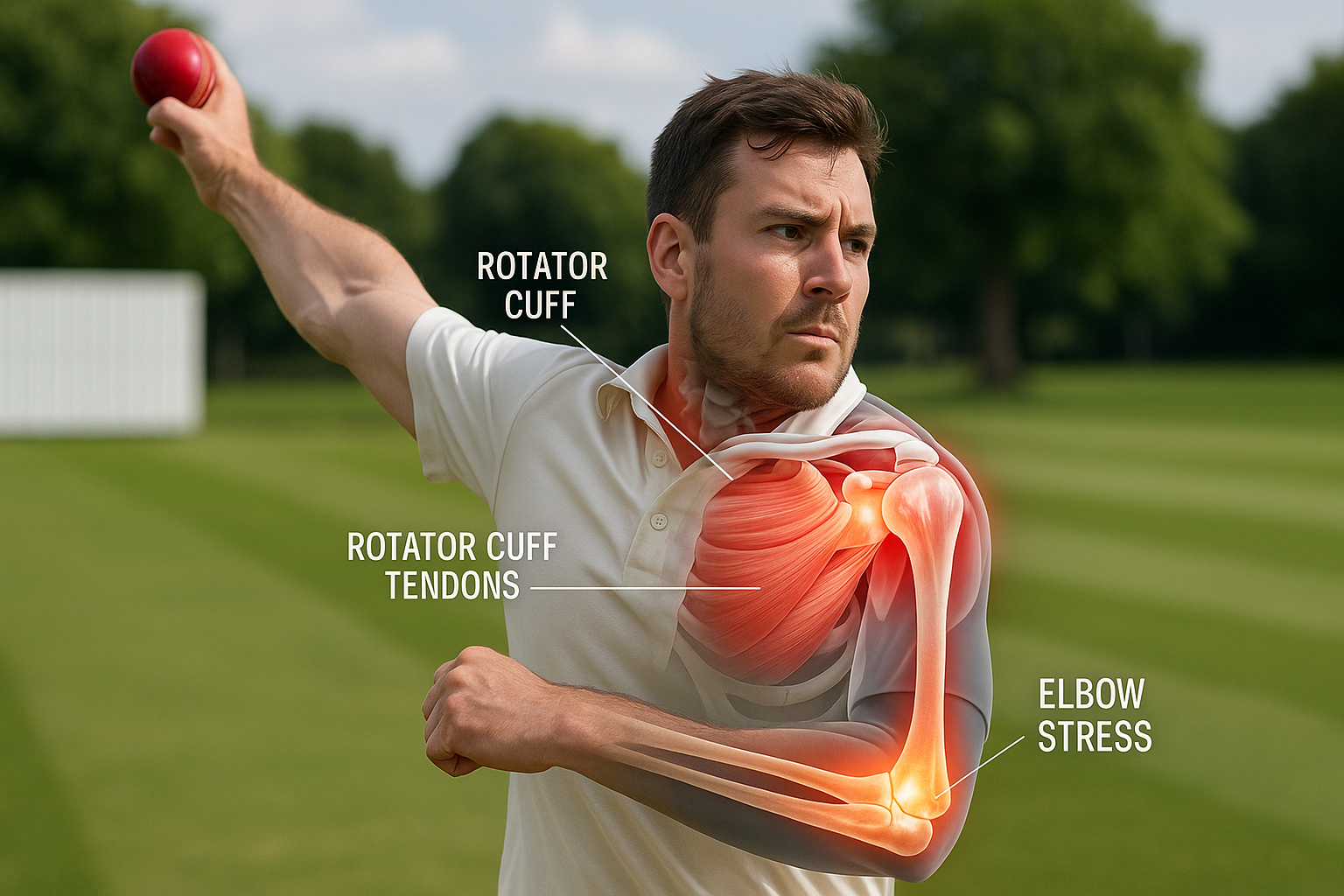
Cricket isn’t just a sport — it’s a passion shared by billions across the globe. From packed stadiums in India to backyard games in Australia, cricket unites fans and players through skill, athleticism, and strategy. But behind the spectacle lies an often-overlooked physical demand: throwing. Whether it’s a fielder firing the ball from the boundary, a bowler delivering 20 overs, or a wicketkeeper aiming for a run-out, the shoulder joint takes on enormous stress every match.
Modern cricket has intensified these demands. Players now face tighter schedules, more matches, and longer training sessions. The result? A surge in shoulder pain throwing, shoulder injuries in cricket, and throwing-related injuries. Fielders often make over 40 long throws per match, bowlers repeat the same overhead action hundreds of times, and wicketkeepers execute explosive throws under pressure — all of which increase the risk of rotator cuff pain, shoulder impingement, and thrower’s elbow. To stay competitive and pain-free, cricketers must understand how the shoulder works, why it’s vulnerable, and how to protect it.

Understanding the Throwing Mechanism and Shoulder Joint
The shoulder joint is the most mobile joint in the human body — and also one of the most unstable. Its mobility allows cricketers to generate high throwing speeds, but this same mobility makes it prone to injury. The key components involved in throwing include the rotator cuff muscles, the scapula (shoulder blade), the humerus (upper arm bone), and supporting tendons and ligaments. These work together to stabilize the joint and transfer power from the body into the throw.
A cricket throw happens in five main phases:
- Wind-Up: Prepares the muscles and joints for action.
- Early Cocking: Shoulder rotates externally while stabilizers engage.
- Late Cocking: The shoulder reaches maximum external rotation — peak stress on the rotator cuff.
- Acceleration: Rapid internal rotation generates throwing velocity.
- Deceleration & Follow-Through: Muscles absorb force and slow the arm down.
This high-speed, repetitive action is why throwing injuries in cricket are common. The rotator cuff must stabilize the shoulder while producing force — and if it’s weak, overused, or imbalanced, injuries like shoulder impingement or rotator cuff tendinopathy can occur.

Common Throwing-Related Shoulder and Elbow Injuries in Cricket
Cricket places enormous stress on the shoulder, especially due to repetitive overhead movements during bowling, throwing, and fielding. These movements can lead to shoulder injuries in cricket that affect performance and, if untreated, may become chronic. Understanding the most frequent injuries, their causes, and how to prevent them is essential for staying pain-free and playing at your best.
Also Read
Rotator Cuff Tendinopathy
Rotator cuff tendinopathy is one of the most frequent causes of shoulder pain after bowling cricket. It occurs when the tendons of the rotator cuff become inflamed or degenerate due to overuse. Early signs include a dull ache deep in the shoulder, pain when lifting the arm, and disturbed sleep.
Causes:
- Repetitive overhead throwing
- Poor throwing technique
- Sudden workload spikes in cricket training
Treatment & Rehabilitation:
- Rest and avoid aggravating activities
- Begin rotator cuff strengthening exercises and shoulder mobility exercises
- Use ice and anti-inflammatory treatment
- Consider physiotherapy and shockwave therapy for chronic cases
Shoulder Impingement
Shoulder impingement occurs when the tendons of the rotator cuff are compressed between shoulder bones during overhead motion. Symptoms include pain when lifting the arm, reduced range of motion, and weakness.
Causes:
- Poor posture and shoulder instability
- Repetitive overhead throwing without proper rest
- Inflammation and degeneration of tendons
Treatment:
- Targeted shoulder impingement exercises to create space in the joint
- Posture correction and scapular stabilization work
- Manual therapy and mobility restoration under guidance of a physiotherapy clinic
Throwing-Related Elbow Pain
Also known as thrower’s elbow, this condition results from repetitive valgus stress on the elbow during throwing. It leads to inflammation, pain on the inner elbow, and reduced grip strength.
Causes:
- Overuse and repetitive strain
- Improper throwing technique
- Sudden increase in throwing volume
Prevention:
- Strengthen the forearm and rotator cuff muscles
- Improve throwing mechanics and workload management
- Use shoulder pain throwing exercises to build joint resilience
Why Do Throwing Injuries Occur?
Throwing injuries don’t happen randomly — they result from specific biomechanical, structural, and training-related factors. Understanding why these injuries occur helps players take proactive steps to prevent them.
Overhead Instability
The shoulder’s extreme mobility is both a strength and a weakness. Repeated throwing without proper strength training leads to shoulder instability, where the humeral head moves excessively within the joint. This instability causes microtrauma, leading to chronic pain and long-term issues like rotator cuff tendinopathy.
Solution:
- Focus on stabilizer muscles, especially the rotator cuff and scapular muscles.
- Incorporate resistance band external rotations and scapular retraction exercises.
Overuse and Workload Spikes
Overuse is a leading cause of throwing-related injuries. Cricketers often bowl or throw hundreds of times in a short period, overwhelming the tissues. Sudden workload spikes in cricket — like jumping from 10 overs a week to 30 — drastically increase injury risk.
Solution:
- Monitor workload using the “chronic vs. acute load” principle.
- Increase training volume gradually by no more than 10–15% per week.
High-Speed Movement and Lack of Deceleration Control
During the deceleration phase, the shoulder must absorb immense forces. If eccentric strength is lacking, tissues become overstressed, leading to repetitive strain injuries.
Solution:
- Add eccentric exercises like slow lowering external rotations.
- Strengthen the posterior shoulder and scapular stabilizers to handle high-speed forces.
Preventive Measures for Shoulder and Elbow Injuries
Prevention is always better than treatment. Cricketers who consistently implement preventive strategies are less likely to suffer from throwing-related injuries and enjoy longer, healthier careers.
Proper Warm-Up and Cool-Down
A structured warm-up prepares muscles and joints for high-intensity activity, while cool-down reduces stiffness and aids recovery.
Warm-Up:
- Dynamic arm swings
- Resistance band activation
- Scapular push-ups
Cool-Down:
- Static stretches
- Gentle mobility drills
- Ice therapy to reduce inflammation
Strength & Conditioning for Cricketers
Strength and conditioning for cricket is the cornerstone of injury prevention. A balanced program builds resilience, improves throwing mechanics, and reduces overuse risk.
Focus on:
- Push vs. Pull Training: Maintain strength balance to prevent shoulder rounding.
- Rotator Cuff Strengthening: Improve stability and endurance.
- Core Stability: Transfer energy efficiently from lower to upper body.
Correct Throwing Technique in Cricket
Faulty technique is a primary cause of shoulder pain when throwing a cricket ball. Overusing the arm instead of the whole body concentrates stress on the shoulder.
Tips:
- Use your legs and core to generate power.
- Maintain a fluid, natural follow-through.
- Work with a coach or physiotherapist to refine technique.
How to Prevent Shoulder and Elbow Injuries – Practical Training Strategies
Beyond basic prevention, cricketers can implement advanced strategies to further reduce injury risk and improve performance.
Improve Shoulder Mobility
Limited mobility leads to compensations that increase injury risk. Shoulder mobility exercises enhance joint range of motion and reduce tension.
Try:
- Wall slides
- Sleeper stretches
- Band dislocates
Strengthen the Rotator Cuff
A strong rotator cuff stabilizes the shoulder and prevents excessive motion.
Exercises:
- Band external rotations
- Prone Y/T/W raises
- Dumbbell internal rotations
Maintain Strength Balance: Push vs. Pull Training
Imbalances between chest and back muscles increase shoulder impingement risk. Balanced strength improves posture and joint mechanics.
Tips:
- Pair every push (like bench press) with a pull (like rows).
- Include face pulls, inverted rows, and pull-ups in your routine.
Musculoskeletal Physiotherapy, Pain Relief & Rehabilitation
Musculoskeletal physiotherapy is vital for recovery from throwing injuries in cricket. It addresses pain, restores function, and prevents recurrence.
Treatment Process:
- Manual Therapy: Improves mobility and reduces pain.
- Targeted Exercises: Strengthen weak areas and restore range of motion.
- Shockwave Therapy: Stimulates healing in chronic tendon injuries.
- Return to Play Protocol: Gradually reintroduces throwing to avoid reinjury.
A physiotherapy clinic specializing in sports injuries can assess biomechanics, design a personalized rehab plan, and guide you safely back to the field.
Common Shoulder Injuries in Cricket – Causes and Prevention
Throwing is central to cricket — but it’s also one of the main reasons cricketers suffer from injuries. Here are the most common throwing-related injuries players face:
- Rotator Cuff Tendinopathy: Overuse and repetitive overhead motion.
- Shoulder Impingement: Poor posture and muscle imbalance.
- Thrower’s Elbow: Excessive valgus stress from repetitive throwing.
Prevention:
- Warm up before every session.
- Maintain balanced strength and proper technique.
- Gradually increase throwing volume.
Conclusion
Shoulder and elbow injuries are among the most frequent challenges cricketers face — but they’re not inevitable. With proper throwing mechanics in cricket, smart workload management, targeted injury prevention exercises, and early physiotherapy intervention, you can dramatically reduce your risk. If you experience shoulder pain after bowling, don’t ignore it — seek expert help and start a structured recovery plan immediately.
FAQs – Shoulder Pain, Bowling Injuries & Recovery in Cricket
How to get rid of shoulder pain after playing cricket?
The best way to get rid of shoulder pain after cricket is to rest the joint, apply ice for 15–20 minutes several times a day, and do gentle mobility exercises. Avoid heavy throwing or bowling until the pain subsides. If discomfort persists beyond a few days, consult a physiotherapist for a tailored rehabilitation plan.
How do I get instant relief from shoulder pain?
For quick relief, try the R.I.C.E. method — Rest, Ice, Compression, and Elevation. Over-the-counter anti-inflammatory medication can also help reduce swelling. Gentle shoulder pain throwing exercises and light stretching improve blood flow and ease tension. If the pain is sharp or persistent, seek medical advice immediately.
How long does it take for a batter’s shoulder to heal?
Recovery time depends on the severity of the injury. Mild shoulder strains may heal within 2–4 weeks, while more severe injuries like rotator cuff tears can take 6–12 weeks or more. Early intervention and consistent physiotherapy can significantly speed up healing and reduce the risk of long-term damage.
Why does my shoulder hurt when bowling?
Shoulder pain when bowling usually occurs due to overuse, poor technique, or muscle imbalances. Repetitive overhead action places stress on the rotator cuff and shoulder joint. Strengthening the rotator cuff, improving mobility, and refining your bowling action are key to preventing pain.
What’s the most common injury in cricket?
The most common injuries in cricket are shoulder injuries (like rotator cuff tendinopathy and impingement), lower back strains, and knee problems. Among bowlers, shoulder and elbow injuries are particularly frequent due to repetitive high-speed throwing and bowling actions.
Is shoulder niggle serious?
A shoulder niggle may seem minor, but if ignored, it can develop into a more serious injury. Persistent discomfort, reduced range of motion, or weakness are signs you should rest and seek physiotherapy. Addressing a niggle early can prevent long-term damage.
What is shoulder bumping in cricket?
Shoulder bumping refers to mild shoulder discomfort or contact pain that often arises after repetitive bowling or throwing. It’s usually linked to inflammation or minor tendon irritation. While not always serious, proper warm-ups, rest, and strengthening exercises can prevent it from worsening.
When does DOMS peak?
Delayed Onset Muscle Soreness (DOMS) typically peaks 24 to 72 hours after intense activity, such as a long cricket match or heavy training session. Gentle stretching, light exercise, hydration, and rest can help reduce soreness and speed up recovery.
How to recover the body after a cricket match?
Post-match recovery should include a cool-down routine, gentle stretching, hydration, and balanced nutrition. Ice baths or contrast showers help reduce muscle soreness. Prioritize sleep and consider physiotherapy sessions if you’re experiencing persistent pain or tightness.
What injuries do fast bowlers have?
Fast bowlers often suffer from shoulder impingement, rotator cuff tendinopathy, lumbar stress fractures, and knee overuse injuries. The repetitive high-speed action puts intense pressure on the shoulders, back, and lower limbs, so proper technique, strength training, and workload management are essential.
How to relieve shoulder pain?
To relieve shoulder pain, rest the affected area, use ice therapy, and perform mobility drills. Strengthening exercises for the rotator cuff and scapular stabilizers help prevent recurring pain. If symptoms persist beyond a week, consult a physiotherapist for an accurate diagnosis.
How to strengthen the shoulder for bowling?
Focus on exercises that build strength and stability in the rotator cuff, deltoids, and scapular muscles. Resistance band external rotations, face pulls, overhead presses, and push-pull balance training are highly effective. Incorporating shoulder impingement exercises and mobility work will further protect your shoulders from injury.
How long does it take for a rotator cuff to heal?
Mild rotator cuff strains typically heal within 3–6 weeks, while more severe tears may require 3–6 months of rehabilitation. Early diagnosis, structured physiotherapy, and gradual return to throwing activities are key to full recovery.
How to get rid of batter’s shoulder?
Rest and physiotherapy are crucial. Focus on strengthening the rotator cuff, improving shoulder mobility, and correcting any biomechanical flaws in your batting or throwing technique. Ice therapy and anti-inflammatory treatments can help manage pain during the healing phase.
Why does my shoulder hurt when I throw a cricket ball?
The main reasons are overuse, poor throwing mechanics, or muscle imbalances. Repetitive overhead action strains the rotator cuff and shoulder capsule. Strengthening supporting muscles and refining your throwing technique are essential for long-term shoulder health.
What is a batter’s shoulder symptom?
Batter’s shoulder typically presents as deep, dull pain in the shoulder joint, reduced power in shots, and discomfort during overhead movements. Early physiotherapy intervention can prevent the condition from worsening and speed up recovery.