Guide to Strength & Conditioning for Youth
Strength and conditioning (S&C) training plays an integral role in developing the physical capabilities of young athletes. It involves structured exercise programs aimed at improving strength, power, agility, speed, endurance, and flexibility. Properly designed S&C programs can help youth athletes improve their sporting abilities, prevent injuries, and promote lifelong fitness. However, there are crucial guidelines to follow when training young athletes to ensure safety, effectiveness, and long-term development. The following is a non-exhaustive list but gives a good all-round recap of the main points. For more information please head to the ASCA website (Australian Strength and Conditioning Association) and download their position statement).
The Importance of Strength and Conditioning for Youth Athletes
Firstly, resistance training does NOT stunt growth (some people still believe this old myth. As long as sound training/coaching principles are applied, there are no dangers.
Youth athletes—typically defined as individuals between the ages of 6 and 18—undergo significant physical, psychological, and developmental changes.
Strength and conditioning training for youth offers a variety of benefits, including:
- Enhanced Performance: By improving strength, endurance, and flexibility, S&C training can enhance athletic performance across multiple sports.
- Injury Prevention: Strengthening muscles, tendons, and ligaments reduces the risk of injuries, particularly in sports that involve high-impact movements.
- Skill Development: Proper S&C can improve coordination and motor skills, which are essential for young athletes to master their sport-specific techniques.
- Promotes Healthy Lifestyle: Regular physical activity fosters positive habits and an understanding of fitness, contributing to overall health and well-being.
Despite these benefits, S&C programs must be tailored to the developmental stage of the child or adolescent. Implementing inappropriate exercises or intensity levels can lead to injury or overtraining, making proper guidance essential.
Sports Conditioning for Youth: Building Strength, Agility, and Endurance
Dos and Don’ts of Strength and Conditioning for Youth
The Do’s
- Prioritise Proper Technique
One of the most important considerations in youth strength and conditioning is ensuring that young athletes perform exercises with proper technique. Correct form minimizes the risk of injury and ensures that the training targets the appropriate muscle groups. Emphasize basic movements such as squats, lunges, push-ups, and core exercises to build a solid foundation before progressing to more complex lifts (Maughan, 2014). - Focus on sport RELEVANT movements
The so called “Functional training”, which mimics movements in everyday life and sports, should be discarded from any S&C program. Those activities are redundant and potentially injury-prone because causing an overuse in the structures (joints and muscles) already overwhelmed by sport practice training those movements. Start by training opposing movements to create better eccentric strength for deceleration and force absorption capability, and control for those explosive movements. When it comes to force production instead, exercises such as squatting, jumping, running, and rotating not only improve athletic performance but also help build strength and coordination in a manner that is relevant to real-world activities (Faigenbaum & Myer, 2010). Multi-joint exercises like deadlifts, squats, and presses help improve strength and power while enhancing athletic function. - Incorporate Progressive Overload
Youth athletes should gradually progress in their training load to avoid injury while still promoting strength and endurance. The principle of progressive overload—systematically increasing the intensity or volume of exercise over time—ensures that the body adapts to increasing demands. For youth, this progression should be slow and steady, focusing more on technique and consistency than on maximal loads (Lloyd et al., 2014). Resistance training should initially focus on bodyweight exercises, and later on free weights or machines as technique improves. - Ensure Age-Appropriate Programming
Strength training programs for youth should be appropriate for the athlete’s age and maturity level. Pre-adolescents (ages 6–11) benefit from general physical activity that enhances coordination, balance, and flexibility rather than formal strength training. For adolescents (ages 12–18), resistance training can be introduced with a focus on technique and low loads, progressing as strength and skill improve. Programs should also vary in complexity and intensity depending on the athlete’s chronological and training age (Sands & Kelly, 2004). - Promote Recovery and Rest
Proper recovery is essential for young athletes who are still growing. Strength and conditioning programs should incorporate adequate rest between sessions, with at least one or two rest days each week. Overtraining can lead to fatigue, poor performance, and potential injuries. Emphasize sleep, hydration, and proper nutrition as part of the recovery process, as these factors significantly influence performance and injury prevention. - Implement a Holistic Approach to Fitness
A well-rounded program should include a mix of aerobic conditioning, strength training, mobility work, and sport-relevant drills. Developing flexibility, agility, and endurance alongside strength improves overall athleticism and ensures that young athletes are well-rounded in their fitness development (Stone et al., 2007).
The Dont’s
- Avoid Early Specialisation
Youth athletes should avoid focusing solely on one sport at an early age, which can increase the risk of burnout, overuse injuries, and mental fatigue. Early sport specialization can also limit their overall athletic development by missing out on a wide variety of skills and movement patterns (Jayanthi et al., 2013). Multi-sport participation is beneficial for developing a broad base of athletic skills and reducing injury risks associated with overuse. - Don’t Overload with High-Intensity or Maximal Weight Training
Adolescents are still developing their musculoskeletal and neuromuscular systems, so lifting heavy weights or using high-intensity training techniques (such as maximal lifts) can lead to injury. The focus during strength training for youth should be on building strength through proper form and light to moderate resistance (Myer et al., 2009). Maximal strength testing or overloading should be avoided until the athlete has demonstrated adequate control and technique. - Don’t Ignore Warm-Up and Cool-Down
Skipping a proper warm-up or cool-down routine is a common mistake that can lead to injury. A dynamic warm-up, followed by mobility and some plyos, prepares the muscles and joints for the demands of training. A cool-down that includes stretching and low-intensity exercises helps improve flexibility and reduces muscle stiffness (Morris et al., 2004). - Avoid Imbalanced Training
Youth athletes often focus too much on certain muscle groups (e.g., arms or legs) while neglecting others, which can result in muscular imbalances. A balanced S&C program should work all major muscle groups evenly. For example, incorporating both pushing (e.g., push-ups) and pulling (e.g., rows) exercises helps maintain proper shoulder health and posture (Faigenbaum, 2015). - Don’t Neglect Mental and Emotional Development
Physical training should not only target the body but also support the mental and emotional growth of young athletes. Pushing young athletes too hard can lead to stress, burnout, and a decrease in motivation. Training programs should foster an enjoyable and supportive environment where athletes feel encouraged and confident. Focus on skill mastery, improvement, and effort rather than just competition and outcomes (Balyi & Hamilton, 2004).
Best Practices for Youth Strength and Conditioning
- Periodisation: Developing a periodised training plan that includes different phases (e.g., preparation, competition, and off-season) ensures that athletes progressively develop strength without risking overtraining. The focus should be on traditional periodisation, trying to give enough saturation on each motor ability. Then make good use of microcycles (weekly plans) and mesocycles (multi-week blocks) to help manage workload and recovery (Issurin, 2016) so to better hit adaptations.
- Individualisation: Each athlete is different in terms of their developmental age, physical capabilities, and sport requirements. A one-size-fits-all approach is not effective. Coaches should consider each athlete’s unique characteristics when designing their training program.
- Parental Involvement: Engaging parents in the training process can help ensure proper nutrition, sleep, and recovery at home. Parents can also reinforce the importance of rest, cross-training, and avoiding early sport specialisation.
- Monitoring and Feedback: Regular assessment of an athlete’s progress—through simple metrics such as performance in specific exercises, subjective measures of fatigue (rate of perceived exertion – RPE), or more formal strength tests—helps ensure that training remains appropriate and effective.
Effective Kids Conditioning Training: Building Strong Foundations for Future Athletes
Kids conditioning training is a fun and engaging way to help young athletes develop the physical skills they need to succeed in sports while promoting overall health and fitness.
The goal is to create a balanced training program that builds strength, endurance, flexibility, coordination, and agility in a safe and age-appropriate manner. By incorporating games and exercises that emphasize movement skills, young athletes can improve their fitness levels and enjoy a variety of physical activities that will benefit them in both sports and everyday life.
One of the key components of kids conditioning training is strength development. At a young age, it’s important to focus on bodyweight exercises that help build strength without putting unnecessary strain on growing bodies.
Simple movements such as squats, lunges, push-ups, and planks help develop the muscles needed for running, jumping, and other athletic activities. These exercises also encourage body control and awareness, which are essential for proper movement in sports like soccer, basketball, or gymnastics.
Agility and coordination are crucial for kids, as they help improve balance and movement speed. Agility drills such as cone weaving, ladder drills, and short sprints help children develop quick footwork and the ability to change direction rapidly. These exercises also improve hand-eye coordination, which is vital for sports like baseball or tennis, where quick reflexes and precise movements are required.
Incorporating cardiovascular exercises into kids conditioning training is essential for building endurance and promoting heart health. Activities like running, cycling, swimming, or even playing games like tag or soccer are excellent ways to improve cardiovascular fitness. These exercises help kids develop the stamina they need to keep up with physical activities and games, reducing fatigue during longer training sessions or competitive events.
Flexibility and mobility exercises are another important aspect of kids conditioning. Stretching helps to maintain flexibility in growing muscles and joints, preventing injuries and improving movement efficiency.
Dynamic stretching exercises such as arm circles, leg swings, and high knees are great for warming up before physical activity, while static stretches like toe touches and hamstring stretches are helpful for cooling down after workouts.
Core strength is fundamental for developing balance and stability, which are important for nearly every sport. Exercises like superman holds, bicycle crunches, and seated twists can help strengthen the abdominal and lower back muscles, providing a stable foundation for more complex movements. A strong core enhances posture and reduces the risk of injuries, especially when participating in high-intensity sports.
Fun and interactive games are a great way to keep kids engaged and motivated in their conditioning training. Activities like obstacle courses, relay races, or games of “Simon says” can help children develop their agility, coordination, and strength while having fun. These games also promote teamwork, communication, and sportsmanship, all of which are essential qualities for any athlete.
Finally, recovery is an essential part of conditioning training for kids. It’s important to encourage rest days and allow for recovery between workouts to prevent overuse injuries.
Proper nutrition, hydration, and sleep are also key to ensuring that kids stay energized and ready for their next training session.
By incorporating these components—strength, agility, cardiovascular fitness, flexibility, core stability, and recovery—into a well-rounded kids conditioning program, children can develop the skills they need to excel in sports while fostering a love for physical activity and a healthy lifestyle.
S&C Training Program at ATHLETIX
Strength and conditioning training is a critical component of youth athletic development. However, it is essential to adhere to best practices to ensure that training is both effective and safe. By focusing on proper technique, age-appropriate programming, and a holistic approach to fitness, coaches and parents can help youth athletes achieve their full potential while minimising injury risks. Avoiding mistakes such as overloading, early specialisation, and neglecting mental health are also important to ensure that young athletes not only perform well but enjoy the process and remain motivated to stay active for life.
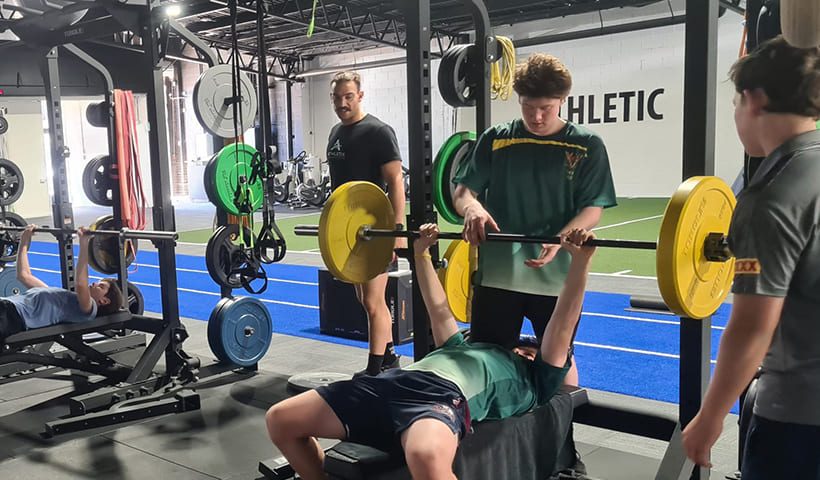
If you’re interested in helping your child become stronger and more competitive in their sport, consider enrolling them in a specialised S&C youth training program. At Athletix we offer tailored training programs designed to enhance speed and athletic performance in youth athletes. Contact us today to learn more and give your child the edge they need to excel.
References
- Balyi, I., & Hamilton, A. (2004). Long-Term Athlete Development. National Coaching Institute of Canada.
- Faigenbaum, A. D. (2015). Strength training for young athletes. Human Kinetics.
- Faigenbaum, A. D., & Myer, G. D. (2010). Resistance training among young athletes: Safety, efficacy, and injury prevention effects. British Journal of Sports Medicine, 44(1), 56-63.
- Issurin, V. (2016). Training for Sport and Exercise. Springer.
- Jayanthi, N. A., LaBella, C. R., Fischer, D., Pasulka, J., & Dugas, L. R. (2013). Sports specialization in young athletes: Evidence-based recommendations. Sports Health, 5(3), 251-257.
- Lloyd, R. S., Oliver, J. L., Hughes, M. G., & Williams, C. A. (2014). Long-term athlete development: A systematic review of the literature. Journal of Strength and Conditioning Research, 28(7), 1978-1997.
- Maughan, R. J. (2014). The role of nutrition in the health and performance of the athlete. Current Opinion in Clinical Nutrition and Metabolic Care, 17(5), 423-428.